
Ghent University publication in Nature Communications
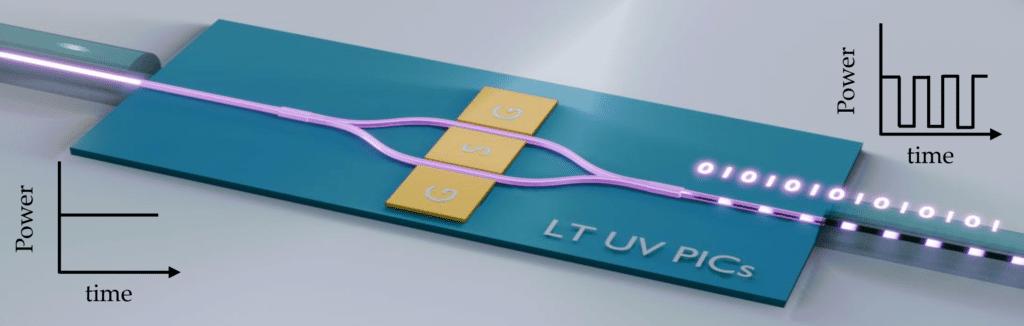
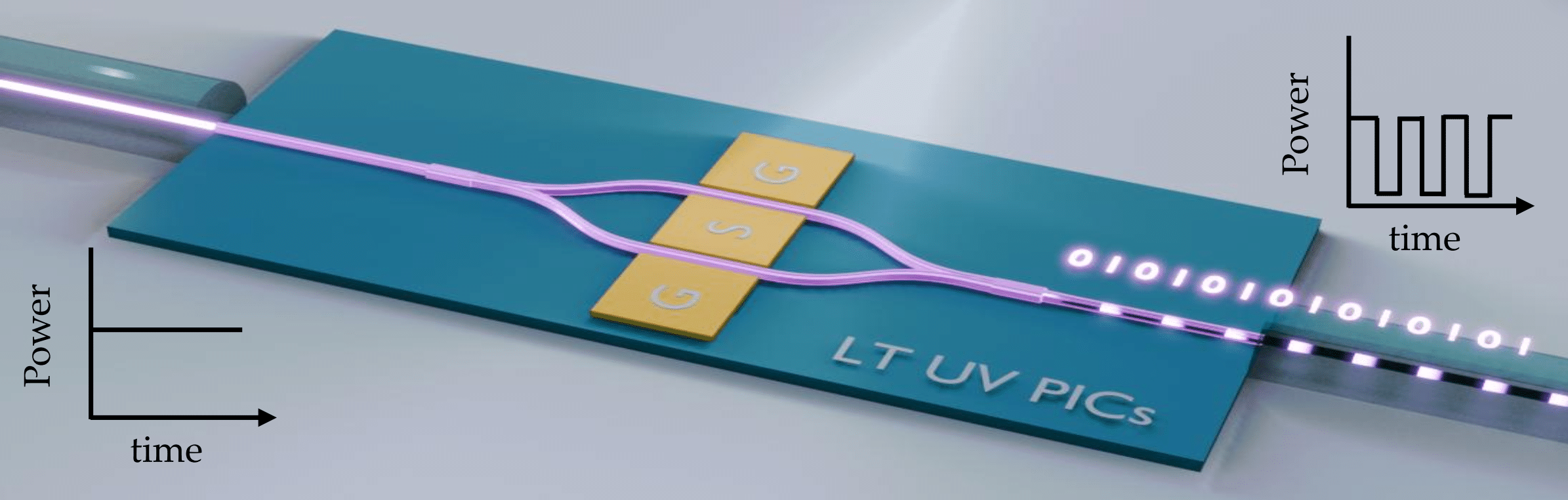
Exciting news from Qu-PIC’s partner Ghent University and their publication in Nature Communications reporting their results on a UV integrated electro-optic modulator based on thin-film lithium tantalate.
This work reports a major breakthrough in integrated photonics due to the unique characteristics and performance of the TFLT EOM device. Key experimental results:
1️⃣ High modulation efficiency in the UV (375 nm) and visible (448 nm)
2️⃣ Ultra-Compact Footprint due to the high efficiency and short operating wavelength
3️⃣ Massive EOE and EE bandwidth exceeding 40 GHz and 67 GHz respectively
4️⃣ Low total modulator insertion loss of only 2.8 dB
The TFLT EOM platform represents a disruptive leap over existing integrated photonics because it resolves severe material limitations that have bottlenecked the UV spectrum for decades:
1️⃣ It overcomes the weaknesses of Thin Film Lithium Niobate (TFLN) due to the photorefractive effect when exposed to high-energy UV light.
2️⃣ Drastic improvement over bulk crystals as traditional UV modulators based on BBO or KDP require massive driving voltages due to their large geometries.
3️⃣ Brings Active Functionality to UV Optics as TFLT combines high-speed active modulation with potential frequency conversion on a single chip.
4️⃣ Wafer-level scaling as TFLT provides a scalable fabrication path to transition complex UV architectures from bulky, vibration-sensitive laboratory setups into robust, mass-manufacturable chips.
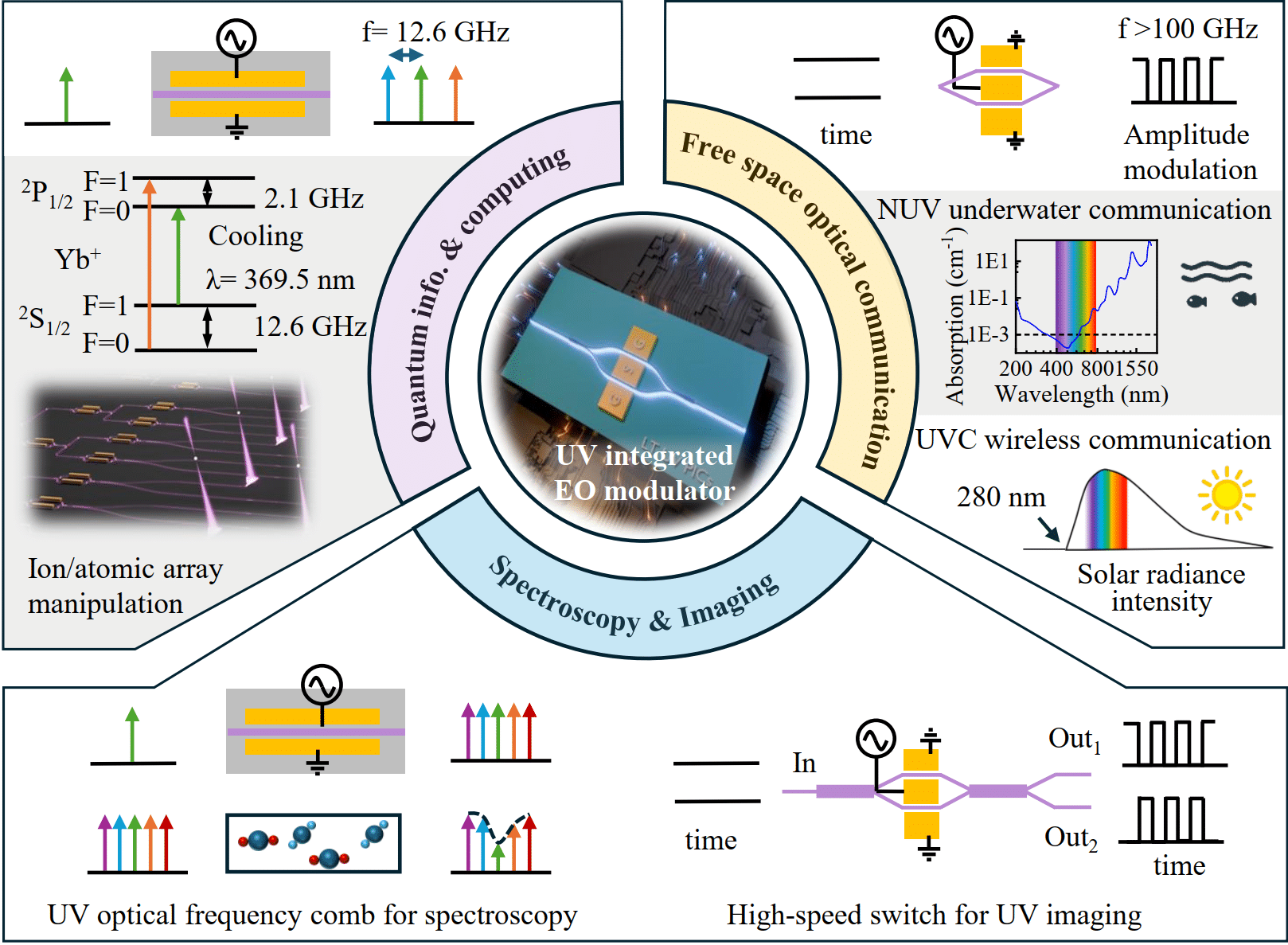
This breakthrough directly accelerates the next generation of scalable trapped-ion quantum computing, portable atomic clocks, ultra-precise UV spectroscopy, and secure solar-blind communications
Read the full article here
Curious to learn more about Qu-PIC’s scientific milestones?